
Skip to Content
Exit

Author Archives: RWVC

  1. How to Maintain a Gas Tankless Water Heater

    Comments Off on How to Maintain a Gas Tankless Water Heater

    Gas tankless water heaters offer an energy-efficient and cost-effective way to get hot water on demand. However, these systems require proper maintenance to prevent premature component failure and ensure long service life. Generally, tankless water heaters should be serviced once a year; however, they may require more frequent maintenance if you have hard water or if you keep your water temperature high. To ensure that your tankless water heater is properly maintained, there are many steps you can take.

    What is a Tankless Water Heater?

    Tankless water heaters are a type of on-demand water heater that provides hot water when needed. They are capable of heating water without the need for a storage tank. Once a hot water faucet is turned on, cold water moves through the unit’s heat exchanger before it is heated by a natural gas burner. This results in a constant supply of hot water without having to wait for a storage tank to fill.

    Some of the primary advantages of gas tankless water heaters are their energy efficiency and compact size. This means that these systems not only save money but also save on the amount of space they take up in an area. However, minerals can build up within the heat exchanger over time, which can cause clogs and affect the water flow speed. Because of this, tankless water heaters require a certain degree of maintenance to ensure optimal performance.
    Steps for Maintaining a Tankless Water Heater

    When performing maintenance on your gas tankless water heater, it’s important to follow these steps:

    All tankless water heaters are not alike and therefore, cleaning procedures may differ.  Always refer to the manufacturer’s recommendations on proper cleaning procedures.

    Steps for Maintaining a Tankless Water Heater
    Click to Zoom

    1. Turn Off The Energy Source

    To ensure optimal safety, it is crucial to turn off the energy source before performing inspection or maintenance. In the case of a gas tankless water heater, you will need to turn off the main gas supply valve.


    2. Close All Main Water Valves

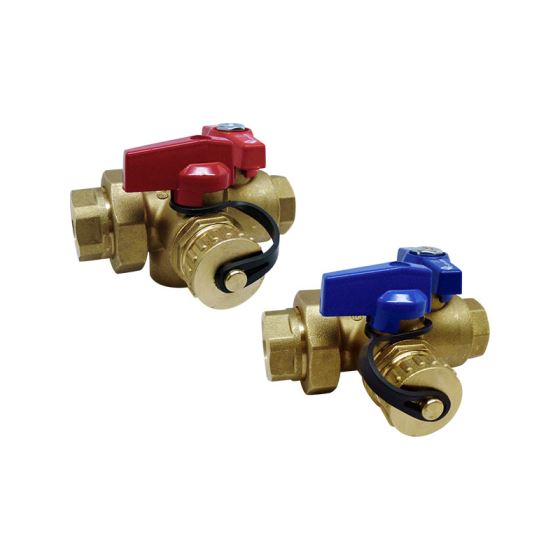
    To prevent water from entering the water heater, you must close the main water valves. Typically, there is a blue valve that marks cold water (in) and a red valve that marks hot water (out).


    3. Remove Purge Port Valve Caps

    Purge port valve caps cover and protect the hose connections used for maintenance.


    4. Attach Hoses To Each Valve

    Connect hoses to the hot and cold purge ports. The hose connected to the cold valve (blue) will attach to a small recirculation pump. The hose connected to the hot valve (red) will feed back to the cleaning solution container.


    5. Open the Port Valves

    Open all the port valves by turning them perpendicular to the direction of the water lines.


    6. Descale

    To thoroughly clean your tankless water heater, use a commercial descaling solution or white vinegar mixture to the container. The recirculation pump should be submerged in the cleaning fluid container. Turn on the pump. The pump will push the cleaning fluid through the hose and into the heat exchanger. The fluid will then exit the heater and return to the cleaning fluid container. 

    (Note: some manufacturers require the electrical power to be on during this procedure to allow all internal actuated valves to open properly)


    7. Flush and Drain the Unit

    To complete your maintenance routine, simply flush and drain your tankless water heater for approximately 45-60 minutes for thorough cleaning. Now, you can close the port valves, disconnect the hosing, and reseal the purge valves. It is always a good idea to do a final flush with clean water to remove any cleaning solution from the unit. 

    Tankless Water Heater Valve Kits From RED-WHITE VALVE CORP. 

    At RED-WHITE VALVE CORP., we offer valve and valve kits for gas tankless water heater maintenance. To ensure that all your daily tasks run smoothly, it’s crucial to maintain proper water pressure, and maintaining your water heater’s pressure relief valves is a key step in doing this. Our water heater relief valves relieve excess pressure in your tankless water heater to prevent pressure buildup that could lead to a tank burst. 

    Our valve and valve kits for tankless water heater maintenance include:

    To learn more about the gas tankless water heater maintenance solutions from RED-WHITE VALVE CORP., contact us or request a quote today.
     

  2. Everything You Need to Know About Ball Valves

    Comments Off on Everything You Need to Know About Ball Valves

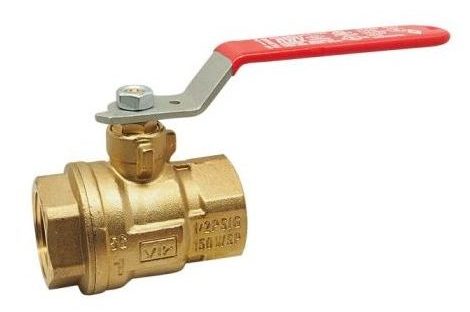
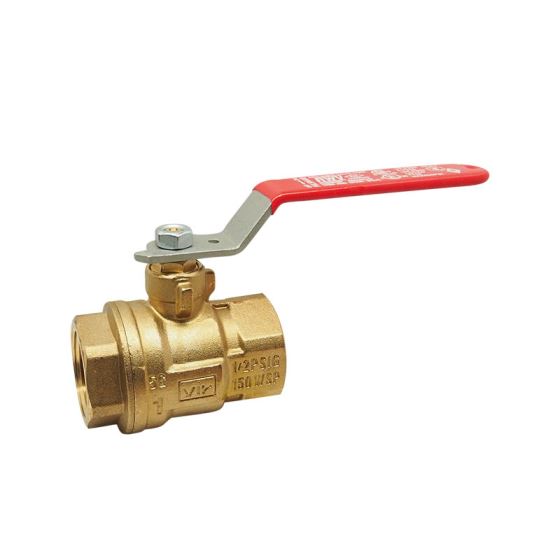
    Ball valves are a type of shut-off valve designed to control the flow of a gas or liquid through the use of a pivoting ball that has a port through its center. When the ball is rotated 90°, the medium is either blocked or allowed to flow through, depending on the orientation of the port. Ball valves come in a wide range of styles, materials, and sizes to meet the particular needs of various applications.

    What Are Ball Valves?

    Ball valves are installed throughout piping systems to allow, obstruct, and control the flow of various vapors, gases and liquids. The ball is mounted against two seats and is connected with a shaft to the control mechanism used to rotate the ball. When the port opening is perpendicular to the flow, the fluid is not allowed to pass through the valve. By rotating the port to the open position, fluid is allowed to pass through at a controlled rate. 5044AB DZR LF Brass Full Port Ball Valve

    Design

    One key design element of ball valves is their construction material. Ball valves can be constructed from a wide range of materials, such as metals, plastics, or metal fused with ceramic. The ball itself is often plated with chrome for added durability. The ideal ball valve material depends on factors such as operating temperature, pressure, and the type of fluid that will move through it. 

    Another design aspect of ball valves is their port profile. The hole through the ball can have different profiles such as V-shaped, reduced port or full port:

    • V-Shaped. A V-shaped or characterized profile allows for more precise control of flow rate by rotating the ball. The profile can be optimized to achieve linear flow characteristics.
    • Reduced port. This is the most common type of bore profile. Reduced bore ball valves can introduce friction losses into a system; however, these losses are relatively small compared to other valve types.
    • Full port. These ports have the same diameter as the pipe, meaning they are easier to clean and there are no extra friction losses. However, full port valves often cost more and are bigger than standard ball valves.

    Function

    Similar to other valves that use a rotating disc to control the movement of fluid throughout a system, ball valves use a ball to control the fluid. By moving the actuator, the ball rotates to a point where the port aligns with the valve body outlet and inlet, allowing the fluid to flow through the valve.

    The valve needs a one-quarter turn of a handwheel to move from fully open to fully closed. This small degree of movement allows operators to quickly open and close the valve in the event of an emergency. By closing the valve, operators can easily isolate a section of piping for repairs, installation, or inspection.

    Applications

    Because of minimal flow restrictions, ball valves cause a low-pressure drop compared to other valve types, which prevents valve damage. Since ball valves only require a one-quarter turn to fully open or shut off, they offer a great way to immediately allow or restrict fluid flow. This advantage makes ball valves a popular option for a wide range of residential and specialized applications, including:

    • Outdoor hoses, plumbing, washing machines, and other residential applications
    • Oil and gas refining and processing applications
    • Automotive production applications
    • Power processing

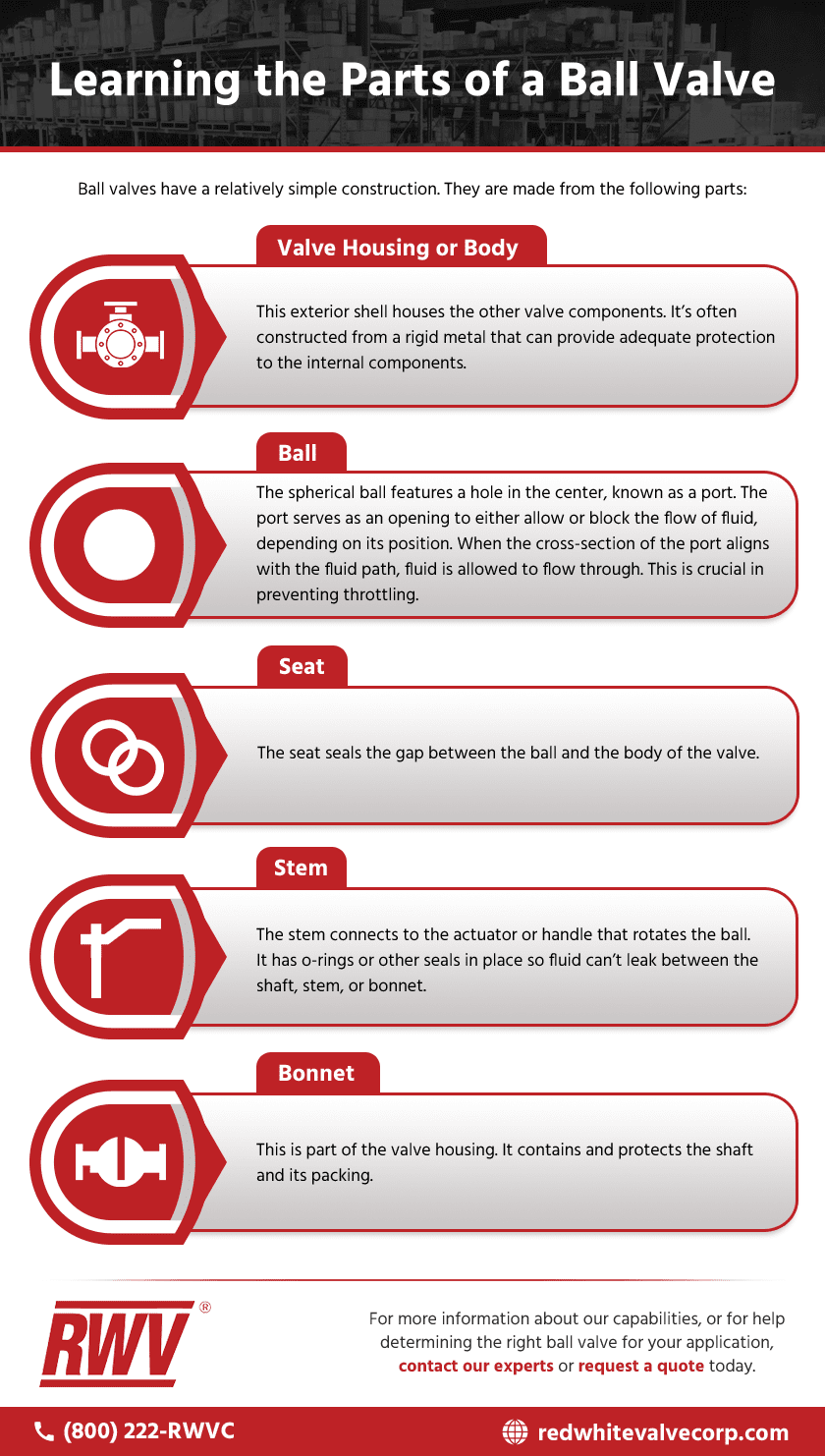
    Ball Valve Parts


    Click to Zoom

    Valve Housing or Body

    This exterior shell houses the other valve components. It’s often constructed from a rigid metal that can provide adequate protection to the internal components.

    Ball

    The spherical ball features a hole in the center, known as a port. The port serves as an opening to either allow or block the flow of fluid, depending on its position. When the cross-section of the port aligns with the fluid path, fluid is allowed to flow through. This is crucial in preventing throttling. 

    Seat

    The seat seals the gap between the ball and the body of the valve.

    Stem

    The stem connects to the actuator or handle that rotates the ball. It has o-rings or other seals in place so fluid can’t leak between the shaft, stem, or bonnet.

    Bonnet

    This is part of the valve housing. It contains and protects the shaft and its packing.


    Working With RED-WHITE VALVE CORP.

    At RED-WHITE VALVE CORP., we specialize in creating high-quality ball valves for various residential, commercial, and industrial applications. Our products include:

    For more information about our capabilities, or for help determining the right ball valve for your application, contact our experts or request a quote today.
  3. Different Materials for Strainer Valves

    Comments Off on Different Materials for Strainer Valves

    Unwanted debris like rust, scale, or other particles, mixed with oil, steam, water, gas, or air can clog or damage a system’s components, ultimately shortening the component’s life and damaging the equipment to which it was attached. Strainers are added at strategic locations in the system to protect essential and vulnerable equipment like flow meters, pumps, and control valves.

    This article reviews the different materials for strainer valves to help you choose the right one for your application.

    What are Strainer Valves?

    Strainer Valve

    A strainer valve is a pipe fitting with an attached metal, mesh, or wedge wire strainer that strains and filters liquid and separates it from solid matter. By catching solids at specific places in the pipeline, unwanted debris cannot move further down the line where they might damage a valve or cause other harmful effects. This results in reduced downtime and maintenance.

    Strainers are usually used in pressurized gas or liquid lines where small amounts of solids are expected with infrequent clean-outs.

    Strainer Valve Benefits and Applications

    Without strainers, systems would constantly have to shut down and components should be cleared of debris regularly; strainers allow devices to run continuously. Although strainer type will differ depending on the situation, the Wye strainer is one of the most popular for a variety of reasons:

    • Installation is versatile and easy. Wye strainers can fit either horizontally or vertically, making installation easier and more versatile.
    • Their compact size makes them less expensive. Wye strainers are smaller than other strainers, meaning they are less expensive to make.
    • Can withstand higher pressure ranges than basket gaskets. Wye strainers can handle pressures that might crack a basket gasket due to their shape.
    • Effortless cleaning saves money. Because wye strainers are maintainable through the cap (in some cases, cleaning can be as easy as flushing through a drain), once you install one they last for a long time. This can save business owners a lot of money, as they are accessible and repairable without breaking the line.

    Wye strainers have various applications but are generally used for steam, natural gas, air pipelines, and liquids.


    Click to Zoom

    Common Materials for Strainer Valves

    The type of strainer and the materials from which it is made will determine the conditions and applications it is most ideal for. Both Wye and T-type strainers can be made of various materials depending on the job, including:

    • Stainless steel strainers. Stainless steel strainers are used on projects where rust, contamination, or corrosion may be a problem.
    • Cast iron strainers. These strainers are used for projects that are not subject to high temperatures, pressures, thermal shock, or mechanical shock.
    • Carbon steel strainers. These strainers are used in high-pressure and temperature jobs where mechanical and thermal stress is likely.
    • Bronze strainers. Bronze strainers are used when dust, dirt, rust, and adhesives need to be removed from a piping system.
    • Brass strainers. Brass strainers offer an effective and affordable alternative for various applications.
    • PVC or CPVC (polyvinyl chloride or chlorinated polyvinyl chloride) strainers. PVC or CPVC strainers are used for removing unwanted solids from industrial piping systems.

    Working with an Industry Leader Like RED-WHITE VALVE CORP.

    RED-WHITE VALVE CORP. is an industry leader in the plumbing, industrial, commercial, and HVAC markets. With over 50 years of experience, we provide world-class service and offer competitive prices for our products. Using our patented technology and precision tooling, we achieve and maintain the highest industry standards. Our ISO 9001:2015 and 14001:2015 certifications demonstrate our dedication to quality, and we are proud to offer the following types of strainer valves:

    • Brass Wye Strainer
    • Bronze Wye Strainer
    • Iron Wye Strainer
    • Stainless Steel Strainer

    For more information about our selection of strainer valves, contact us today.

  4. Bronze vs. Brass Valves

    Comments Off on Bronze vs. Brass Valves

    Bronze and brass have similar compositions, appearances, and applications. They are both widely used copper alloy materials for valves, but they have different properties and price points. We’ll discuss these properties in more detail here, as well as their specific applications and advantages.

    Bronze Valves

    Bronze Valves

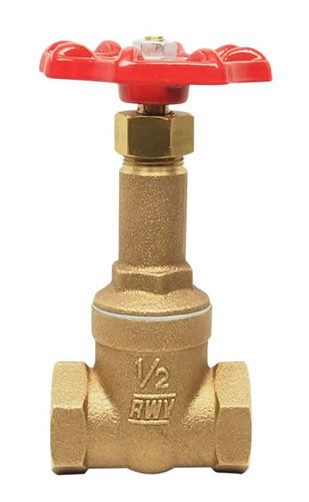
    Bronze valves date back to the Romans during the first century B.C. Today, bronze is still primarily made from copper and tin, but modern additives typically include aluminum or manganese. Some bronze alloys can hold a polish if they contain nickel or lead, but generally bronze has a rough, porous finish.

    Bronze valves can only be made by mold casting or machining cast ingots.

    Brass Valves

    Bronze Valves

    Brass is a copper and zinc alloy. Brass valves are more versatile and malleable than bronze, and they can be made through casting, heat extrusion, forging, or cold drawing. The material naturally has a smooth finish that can save on finishing costs.

    Brass is extremely corrosion-resistant, but prolonged exposure to chlorine or water can break down the zinc in the metal. Valves made of brass are ideal for natural gas and potable water applications.

    Applications of Bronze Valves vs Brass Valves

    Bronze vs. Brass Valves

    Click to Zoom

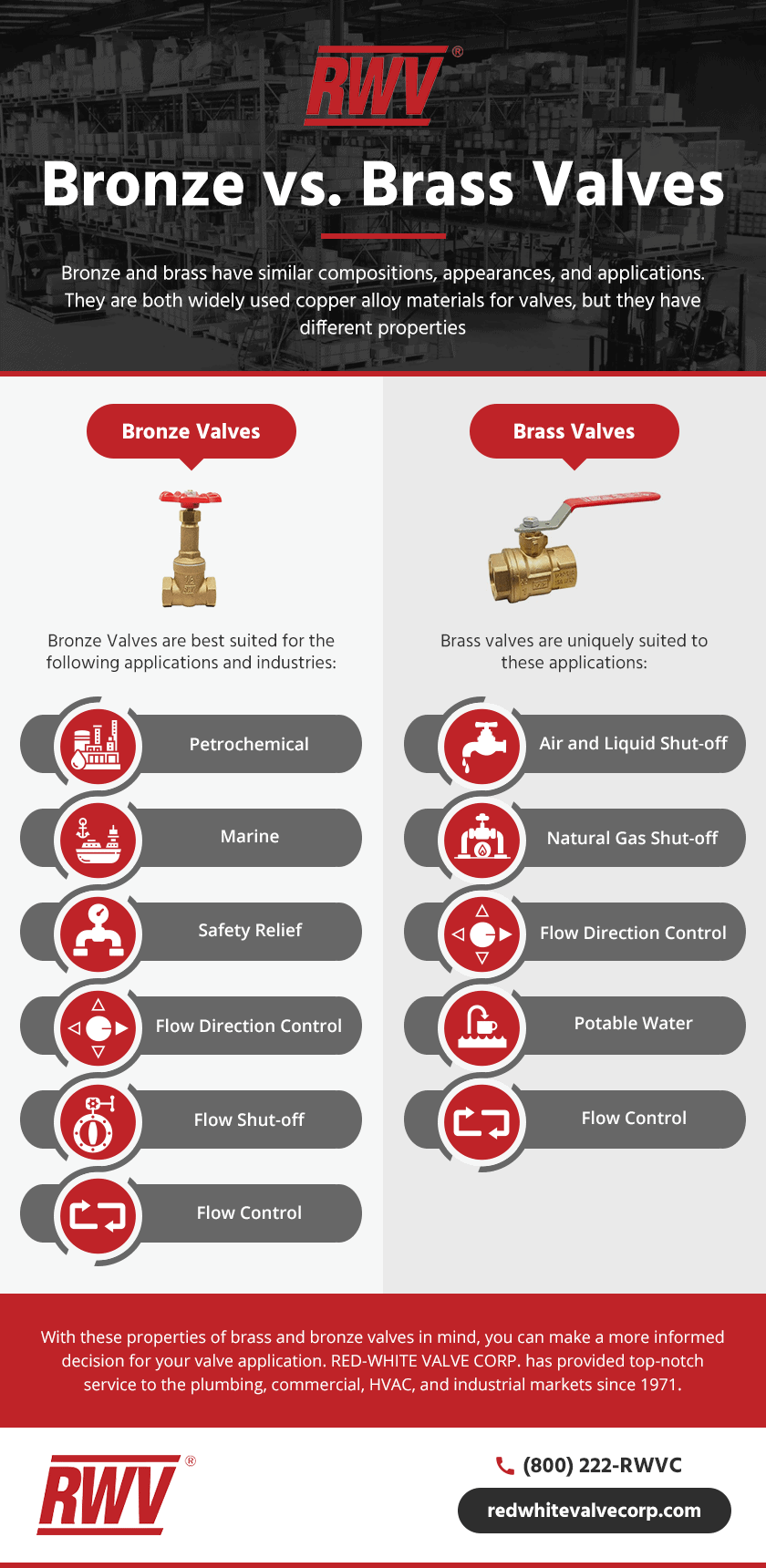
    Because of their specific properties, bronze valves are best suited for the following applications and industries:

    • Petrochemical
    • Marine
    • Safety relief
    • Flow direction control
    • Flow shut-off
    • Flow Control

    Brass valves are uniquely suited to these applications:

    • Air and liquid shut-off
    • Natural gas shut-off
    • Flow direction control
    • Potable water
    • Flow Control

    Advantages of DZR Brass vs. Yellow Brass Valves

    Bronze Valves

    DZR brass, or dezincification-resistant brass, refers to brass with particular elements that resist the removal of zinc by water. With non-DZR brass, continuous water flow could leave behind a weak and porous copper structure. DZR brass is ideal for pipes, fittings, and valves for potable water, or high-pressure water situations, such as waterworks.

    DZR brass is formulated through a heat treatment process to resist dezincification and increase strength. In contrast, ordinary yellow brass water valves can corrode quickly. They are generally cheaper and easier to machine.. DZR brass valves are superior because of their higher copper content and lower lead and zinc content. The longevity benefits of DZR brass far outweigh any financial savings from using yellow brass valves.

    Valves from RED-WHITE VALVE CORP.

    With these properties of brass and bronze valves in mind, you can make a more informed decision for your valve application. RED-WHITE VALVE CORP. has provided top-notch service to the plumbing, commercial, HVAC, and industrial markets since 1971. We offer a vast selection of products, including standard valves and lead-free valves. Contact us for information or to start your project.

  5. Automatic vs. Manual Balancing Valves: Benefits of a Hydronic System

    Comments Off on Automatic vs. Manual Balancing Valves: Benefits of a Hydronic System

    Hydronic HVAC systems use water to heat and cool facilities evenly. One of the essential components that aid in the even spread of temperatures are balancing valves.

    Balancing valves are throttling devices that help regulate the flow of water in hydronic components. Generally, there are two types of balancing valves, automatic and manual, each with benefits and drawbacks. This blog will compare automatic and manual balancing valves and go over applications and advantages for each.

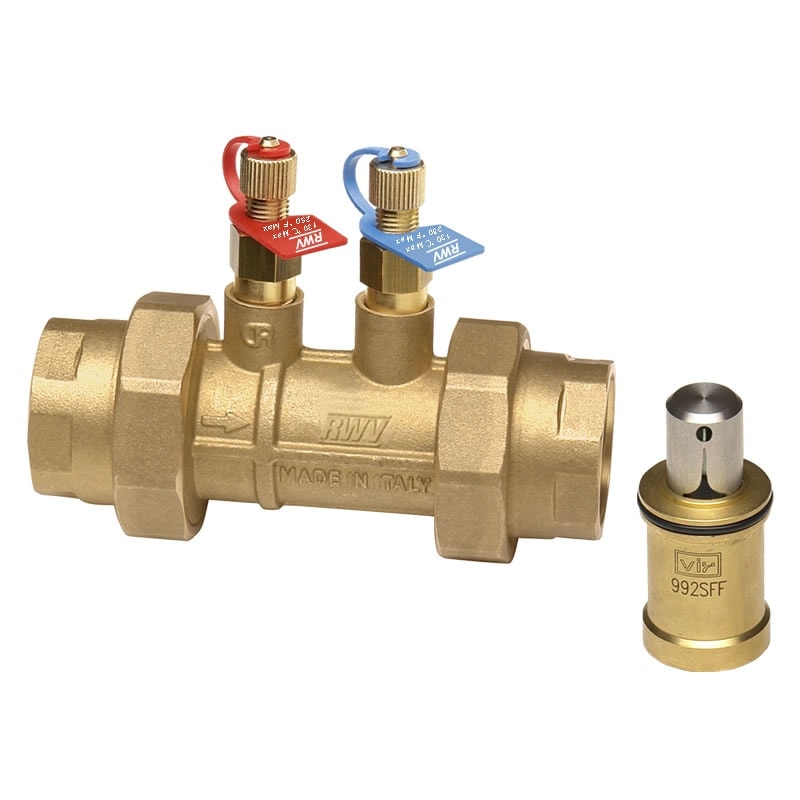
    Manual Balancing Valves9527AB

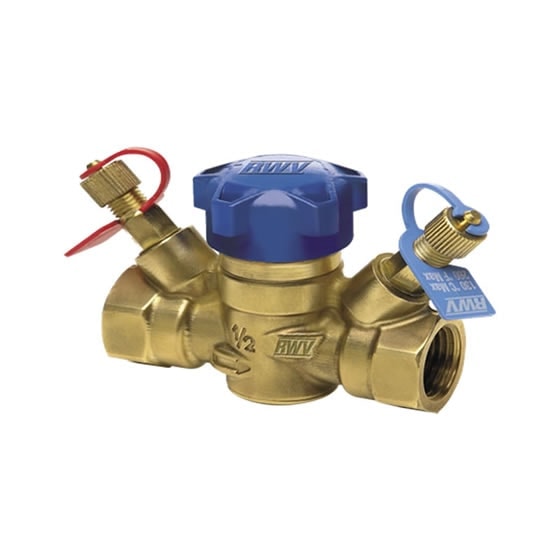
    Manual balancing valves are pressure-dependent and do not adjust to changing system pressure. Instead, manual balancing valves are manually adjusted throttling valves, which provide the ability to gauge pressure drop across the valve. Pressure drop is measured, flow is calculated, and valve openings are adjusted by a test and balance evaluator who aids in achieving flow values in accordance with the design.

    This manual operation will maintain a balanced system at full-load conditions (designed load), even though it only performs under those conditions around 2-3% of the time. However, as soon as the system dynamics slightly differ, the system becomes unbalanced and remains so until reevaluated and adjusted.

    Advantages of Manual Balancing Valves:

    • Sensitive: Manual balancing valves are capable of reading low rates of flow very accurately.
    • Environmentally friendly: Manual balancing valves tend to use less energy than automatic valves, thereby using fewer non-renewable resources.
    • Cost-effective: As manual balancing valves use less energy than automatic valves, they save money on energy bills.
    • Intuitive: When there is a problem with a manual balancing valve, it is easier to troubleshoot than with an automatic valve.

    Automatic Balancing Valves9907T

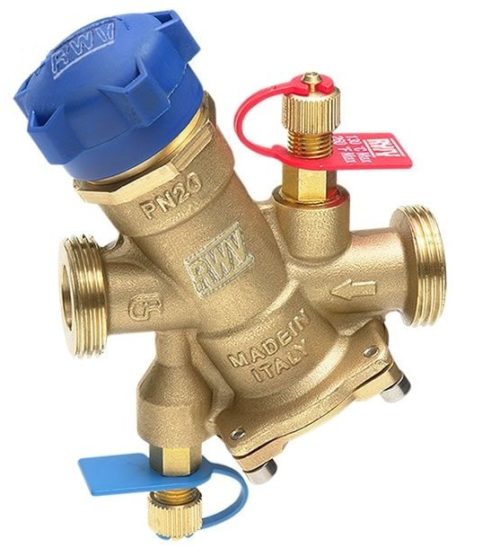
    Automatic balancing valves function independently of pressure to keep the water flow constant. They maintain the designed flow rate within the PSID range specified by the manufacturer, even as the system pressure varies. Accordingly, they provide system stability as they maintain an overall system balance, even when other branches fluctuate, thereby achieving full flow authority.

    Automatic balancing valves act as pressure differential regulators at most varying load conditions by controlling system pressure changes in the valve itself, which makes them more user-friendly.

    Advantages of Automatic Balancing Valves:

    • Ease of use: Automatic balancing valves adjust themselves and, therefore, do not require any balancing expertise or expense.
    • Efficient: Automatic balancing valves eliminate overpumping at the part load, thereby reducing pumping costs. They also maintain water flow, which ensures boiler efficiency.
    • Durable and quiet: They reduce water noise and erosion, leading to a longer-lasting system.
    • Time-saving: Valves balance automatically; therefore, no system rebalance is required when terminal units are reconfigured within the system.

    Applications of Manual Balancing Valves vs. Automatic Balancing Valves

    Both manual balancing valves and automatic balancing valves are useful in a myriad of applications, which depend on the system requirements.

    Manual Balancing Valve Applications:

    • HVAC systems: Manual valves are excellent in facilities where areas regularly experience low rates of flow.
    • Power generation systems: Manual balancing valves work especially well with variable speed pump control systems.
    • Domestic hot water recirculation lines: Manual balancing valves can control water flow through a plumbing system efficiently.

    Automatic Balancing Valve Applications:

    • HVAC systems: Automatic balancing valves work especially well where a balanced flow is needed throughout a facility.
    • Fan coil units: Automatic balancing valves are better at regulating fan coil units evenly.

    Solutions from RED-WHITE VALVE CORP.

    While manual balancing systems may be seen as old-fashioned, they are still the preferred system, depending on the application. The initial cost differences between manual and automatic balancing valves are minimal, so it all comes down to what you need the balancing valve in your system to do.

    At RED-WHITE VALVE CORP., we believe as a company that it is truly about listening to what our customers are saying and delivering on our promises. To do this, we have added and continue to add new product lines and work tirelessly to satisfy customers with world-class service while offering competitive pricing.  Contact us for more information on our products.

  6. Advantages of DZR Brass Valves

    Comments Off on Advantages of DZR Brass Valves

    Dezincification-resistant (DZR) brass can help prevent corrosion from negatively affecting various components, including valves used in a number of applications. Although many applications use valves and other fittings made from normal brass alloys, certain impurities could cause a type of corrosion known as dezincification. In applications where dezincification is a risk, DZR brass valves provide enhanced protection to maximize the longevity of certain components.

    Here we’ll review what dezincification specifically is and how DZR brass valves and other parts can protect against it.

    What Is Dezincification?

    5044AB

    Brass is a combination of mostly copper and zinc. While copper is un-reactive, it is vulnerable to damage and extremely malleable. Zinc, on the other hand, is strong but reactive and more easily corroded. When the two metals combine to form brass, the resulting metal is ideally both strong and un-reactive, featuring the favorable properties of copper and zinc. However, normal brass is potentially still vulnerable to corrosion in the form of dezincification.

    Dezincification entails the loss of zinc through corrosion because of its reactiveness. It’s a certain type of corrosion process resulting from water contact. In turn, water removes zinc from the copper alloy, forming a copper-rich and porous metal with compromised mechanical strength. Specifically, the removal of zinc leaves a layer of Cu and Cu oxide. Over time, further corrosion can continue underneath this layer, gradually leaving weaker copper in place of more durable brass. An in-service valve suffering from dezincification can have a white powdery substance or mineral stains on its exterior surface.

    If dezincification is allowed to continue, the corrosion will eventually weaken the metal and enable gases or liquids to seep through it.

    What Is DZR Brass?

    DZRDezincification-resistant (DZR) brass helps prevent dezincification of brass materials, increasing their lifespan and enabling various applications to benefit from consistent durability. Many parts feature DZR brass construction, including fittings and valves in potable water and other types of environments with corrosive water.

    DZR brass’s composition features superior strength that makes it suitable for a wider range of applications in need of a reliable metal product.

    Generally, DZR brass includes higher copper content along with lower zinc content. NSF lead free* DZR alloys are also available. Additionally, other trace elements compose this metal. A unique heat treatment process further enhances the properties of DZR brass.

    Quality Assurance

    Strict control over every stage of the manufacturing process helps assure dezincification resistance. It’s important for fabricators to have control over casting, brass rod production, heat treating, and shaping, along with other processes, to eliminate the possibility of corrosion. It’s equally crucial to have total control over major alloying elements, and manufacturers must also exclude any unwanted impurities.

    Following heat treatment, dezincification tests can perform periodic checks on components, which helps make sure that the heat treatment was successful and that the metal features the correct composition. The closely controlled dezincification test involves 24-hour exposure to a type of hot cupric chloride solution. At RED-WHITE VALVE CORP., our products undergo the ISO 6957:1988 (Copper alloys – Ammonia test for stress corrosion resistance) test. This uses a test solution with a pH of 9.5. Following exposure, the test applies slight deformation to samples prior to inspection, which reveals fine cracks and other faults.

    Reliable DZR Brass Products from RED-WHITE VALVE CORP.

    DZR brass valves and other products can increase the strength of systems exposed to highly corrosive water, eliminating the need for frequent maintenance and the replacement of parts. RED-WHITE VALVE CORP. offers a wide selection of DZR brass products to meet the needs of a diverse range of applications.

    For more information about our products and assistance with finding the right product for your application, contact us today.

  7. What’s the Difference Between PEX A, B, and C Valves?

    Comments Off on What’s the Difference Between PEX A, B, and C Valves?

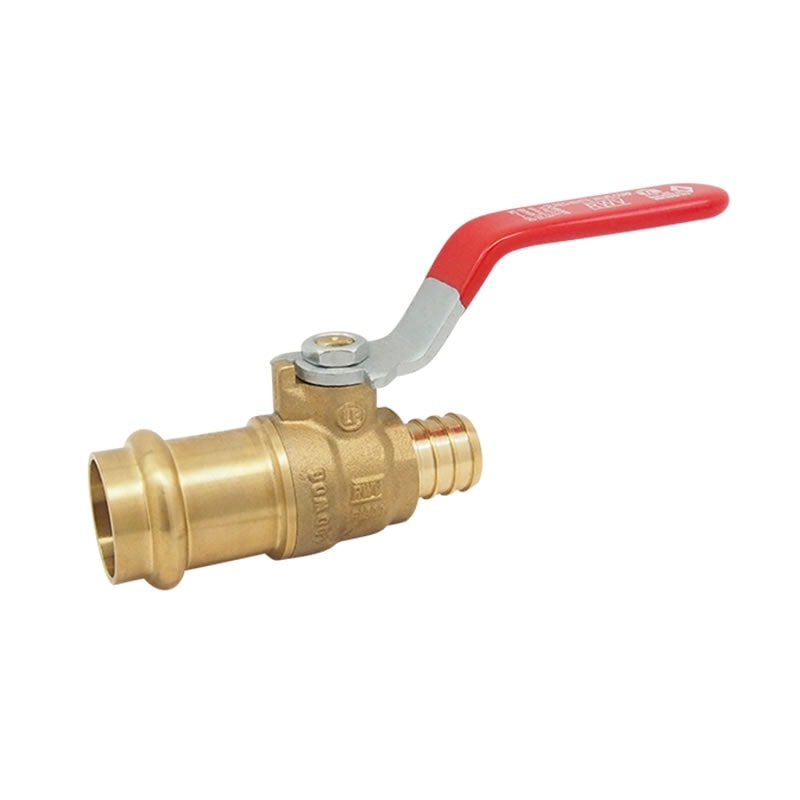
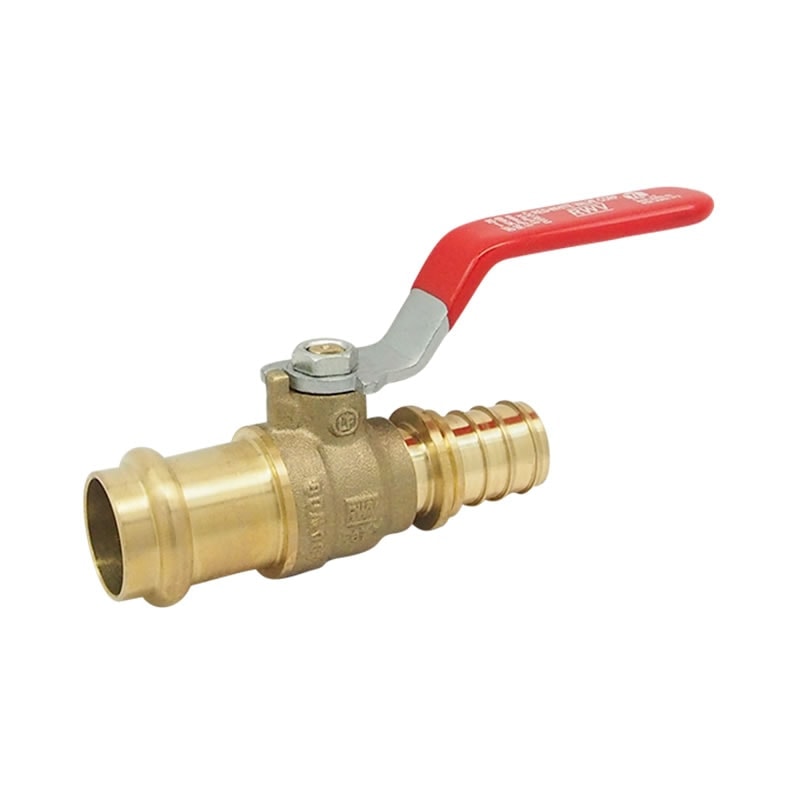
    PEX valves refer to valves designed to connect with tubing and piping made from cross-linked polyethylene (PEX). The main difference between them and regular valves is how the connections are made; PEX valves connect to PEX tubing and piping without the use of transition adapters. Other than this distinction, the two are highly similar, making them suitable for many of the same applications. Typical uses for PEX valves include shut-off, maintenance, and repair operations.

    The type of polyethylene used for PEX valve tubing and piping is cross linked polyethylene. It has tightly packed polymers, which results in some characteristics that are very good for plumbing and hyfronic applications. The cross-linking process enhances or adds certain properties that make the material better suited for plumbing components. It can be performed in three ways: A, B, and C. Each involves distinct techniques and/or technologies, which results in different material characteristics. Below, we highlight the differences between the three types of PEX production methods.

    PEX A vs. PEX B vs. PEX C Valve Tubing/Piping Material

    PEX tubing and piping components are available in three main varieties: PEX A, PEX B, and PEX C. While this naming convention may seem like the products are graded from best to worst, it actually refers to how their materials are made.

    • PEX A: These materials are cross-linked using the Engel process, which involves the introduction of peroxides to the HDPE before it is formed. The addition of the compounds allows for more bonding at the atomic level, resulting in the highest degree of cross-linking. The processed material offers the greatest flexibility and kink resistance of all PEX materials.
    • PEX B: These materials are cross-linked using the silane process, which is also commonly referred to as steam or moisture cross-linking. This process is performed on the HDPE material after it has been formed. By passing the formed component through steam in the presence of a silane-based catalyst, the polymers are encouraged to form cross-links. The processed material is not expandable and the least resistant to kinks.
    • PEX C: These materials are not as common as PEX A and PEX B. The cross-linking process involves subjecting the HDPE material to an electron beam or gamma radiation.

    In addition to their unique characteristics, PEX A, PEX B, and PEX C have some shared properties. For example:

    • They exhibit enough flexibility for use in plumbing components.
    • They offer resistance to corrosion.
    • They meet ASTM standards.
    • They accommodate use in potable water applications (if NSF-certified).

    PEX Valve Connection Types

    PEX valves can have a variety of connection types. Each has unique instructions on how the valve must be connected to the tubing or piping.

    PEX valves from RED-WHITE VALVE CORP. are available with the following connection types:

    5004ABF-1807

    PEX F1807 valve connections are manufactured according to the ASTM F1807 standard. Proper installation of these valves requires an appropriate crimp ring and PEX tube/pipe. The installation process is as follows:

    1. The crimp ring is slid over the end of the tubing/piping.
    2. If installing a tailpiece, the union nut is mounted over the tailpiece before it is connected to the tube/pipe.
    3. The valve is pushed into the end of the tubing/piping until it stops.
    4. The crimp ring is positioned 1/8 to 1/4 inch away from the end of the tubing/piping and over the ribs of the valve.
    5. The crimp ring is crimped using a crimping tool.
    6. The crimp is checked using a gauge.

    5014ABF-1960

    PEX F1960 valve connections are manufactured according to the ASTM F1960 standard. Proper installation of these valves requires an appropriate ring and PEX tube/pipe. The installation process is as follows:

    1. The ring is slid onto the PEX tube/pipe.
    2. If installing a tailpiece, the union nut is mounted over the tailpiece before it is connected to the tube/pipe.
    3. The PEX tubing/piping and ring are expanded using an expander tool.
    4. The expanded assembly is inserted onto the PEX valve.

    5414ABEVERLOC+

    REAHU Everloc+® valve connections are manufactured according to the REHAU EVERLOC+® patented system. Proper installation of valves with EVERLOC+® compression-sleeve connections requires EVERLOC+® PEXa compression sleeves and REHAU PEXa tubes/pipes. Installation operations should only be performed with EVERLOC+® compression-sleeve tools.

    PEX Valves at RED-WHITE VALVE CORP.

    Want to learn more about PEX valves? The valve experts at RED-WHITE VALVE CORP. are here to help! As a premier supplier of high-quality valves for the plumbing, commercial, industrial, and HVAC markets, including PEX valves, we can answer and address any questions or concerns you may have about the components. Additionally, if you need PEX valves for your operations, we can help you identify and source the right solution for your needs.

    Our PEX valve offerings include:

    • Ball valves
    • Transition ball valves
    • Ball valves with drains
    • Ball valves with mounting foot
    • Ball valves with drains and mounting foot

    To learn more about our products, check out our PEX valve catalog or contact us today.

  8. A Guide to Valve Actuators

    Comments Off on A Guide to Valve Actuators

    At RED-WHITE VALVE CORP., we are a premier supplier of valves and related products for the plumbing, commercial, industrial, and HVAC markets. One of our core product offerings is valve actuators, which are used to facilitate valve operation in fluid handling systems across a wide range of industries and applications. Our experts have put together the following guide on these important devices to help readers understand what they are, what they do, what types are available, and how to select the right one for their needs.

    What Are Valve Actuators?

    A valve actuator is a mechanical device that moves the valve’s closure element to open and close its flow passages as needed. It can be operated manually by a human worker or automatically by an outside power source (e.g., electricity, compressed air, or compressed hydraulic fluid). Depending on its design, it can be used for on-off flow applications and/or throttling flow applications.

    Types of Valve Actuators & Actuation Methods
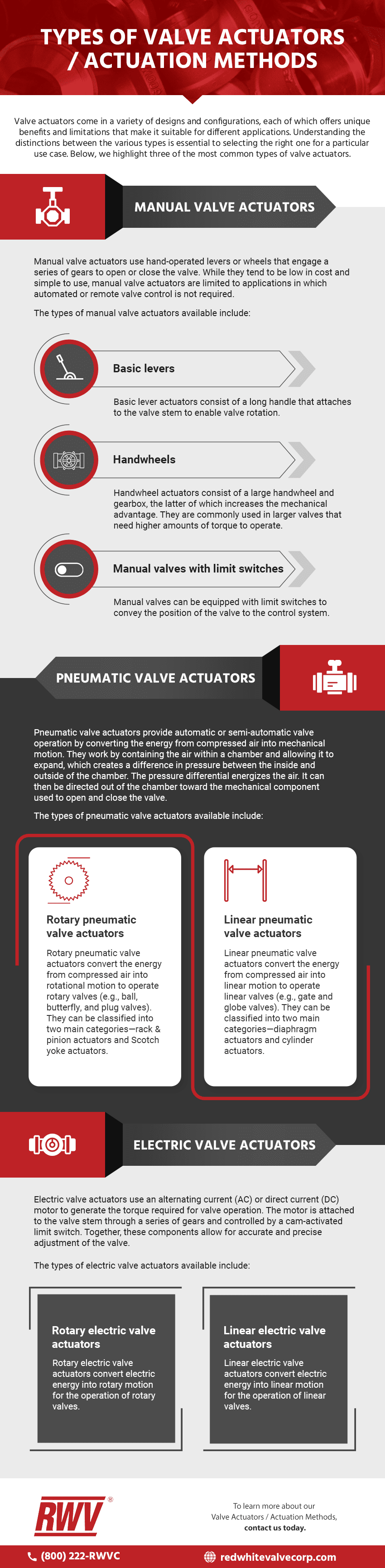
    Click to Zoom

    What Do Valve Actuators Do?

    Regardless of the method of actuation, all valve actuators must perform a number of basic functions, including the following:

    • Move the closure element: The closure element refers to the component (e.g., the ball, disc, or plug) used to partially or completely block the flow of fluid through the valve. The valve’s actuator must be able to provide the force necessary to move and position the closure element as needed, even under demanding process conditions.
    • Maintain the closure element position: In addition to moving the closure element, the actuator must be able to keep it in the desired position. It may use a spring, fluid power, or mechanical stiffness for this purpose, depending on its type.
    • Seat the valve with sufficient torque: The actuator must generate and maintain enough torque to hold the valve in the closed position during shutoff operations.
    • Have a failure mode: In the event of power failure, the actuator should have an appropriate failure mode (e.g., as-is, fully closed, fully open) to ensure the system does not experience excessive damage.
    • Provide proper rotational capabilities: Actuators must be able to accommodate the rotational capacities (generally 90 or 180 degrees) of their valves.
    • Operate at the appropriate speed: Special control circuit elements can be used to regulate the cycle speed of a valve actuator. For fast cycle speeds that fall below half of the standard actuator cycle time, it is important to carefully select the valve to avoid shock-related damage to its parts.

    Types of Valve Actuators / Actuation Methods

    Valve actuators come in a variety of designs and configurations, each of which offers unique benefits and limitations that make it suitable for different applications. Understanding the distinctions between the various types is essential to selecting the right one for a particular use case. Below, we highlight three of the most common types of valve actuators.

    Manual Valve Actuators

    Manual valve actuators use hand-operated levers or wheels that engage a series of gears to open or close the valve. While they tend to be low in cost and simple to use, manual valve actuators are limited to applications in which automated or remote valve control is not required.

    The types of manual valve actuators available include:

    • Basic levers: Basic lever actuators consist of a long handle that attaches to the valve stem to enable valve rotation.
    • Handwheels: Handwheel actuators consist of a large handwheel and gearbox, the latter of which increases the mechanical advantage. They are commonly used in larger valves that need higher amounts of torque to operate.
    • Manual valves with limit switches: Manual valves can be equipped with limit switches to convey the position of the valve to the control system.

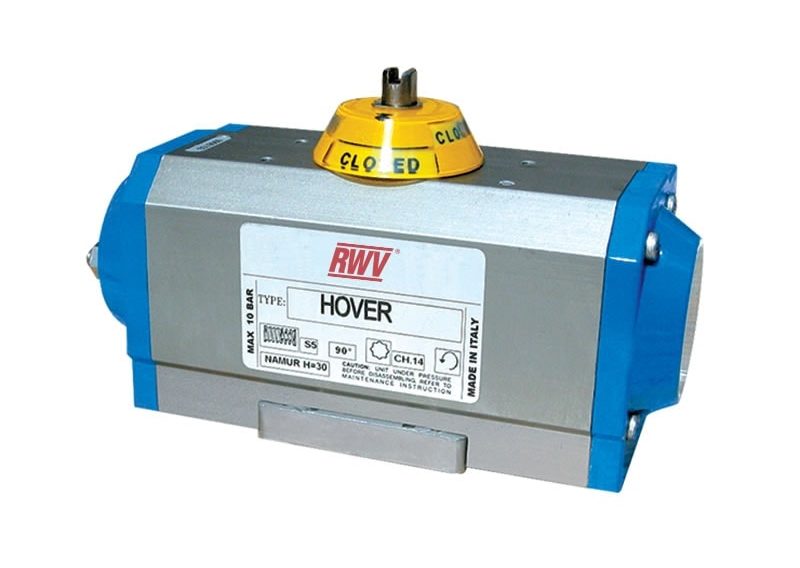
    Hovercraft Pneumatic ActuatorPneumatic Valve Actuators

    Pneumatic valve actuators provide automatic or semi-automatic valve operation by converting the energy from compressed air into mechanical motion. They work by containing the air within a chamber and allowing it to expand, which creates a difference in pressure between the inside and outside of the chamber. The pressure differential energizes the air. It can then be directed out of the chamber toward the mechanical component used to open and close the valve.

    The types of pneumatic valve actuators available include:

    • Rotary pneumatic valve actuators: Rotary pneumatic valve actuators convert the energy from compressed air into rotational motion to operate rotary valves (e.g., ball, butterfly, and plug valves). They can be classified into two main categories—rack & pinion actuators and Scotch yoke actuators.
    • Linear pneumatic valve actuators: Linear pneumatic valve actuators convert the energy from compressed air into linear motion to operate linear valves (e.g., gate and globe valves). They can be classified into two main categories—diaphragm actuators and cylinder actuators.

    Cutter-MODElectric Valve Actuators

    Electric valve actuators use an alternating current (AC) or direct current (DC) motor to generate the torque required for valve operation. The motor is attached to the valve stem through a series of gears and controlled by a cam-activated limit switch. Together, these components allow for accurate and precise adjustment of the valve.

    The types of electric valve actuators available include:

    • Rotary electric valve actuators: Rotary electric valve actuators convert electric energy into rotary motion for the operation of rotary valves.
    • Linear electric valve actuators: Linear electric valve actuators convert electric energy into linear motion for the operation of linear valves.

    How to Select the Right Valve Actuator

    Given the broad selection of valve actuators available, it is important to carefully research your options, so you select the one that is best for your needs. Some factors to keep in mind when evaluating whether a particular product is right for your application include:

    • Power source availability: Does your facility have the necessary power source to operate the actuator? If you choose to use a powered valve actuator, your facility must be equipped with the appropriate power source. For example, electric actuators need an electric motor, while pneumatic actuators need a compressed air supply.
    • Automation requirements: Do you want to automate valve functions? Automation allows you to monitor and control valves without having to be physically near them. While manual actuators do not accommodate automation, powered actuators do.
    • Application conditions: What conditions will the actuator face within the application? Regarding temperature, pneumatic actuators are suitable for use in temperatures ranging from -4–150° F, while electric actuators can operate in temperatures ranging from -40–150° F. Regarding hazardous environments, pneumatic actuators are the preferred choice since they are explosion-proof. However, electric actuators can be used if they have an appropriate NEMA-rated enclosure.
    • Emissions: Are you trying to minimize your facility’s emissions? Pneumatic actuators emit various levels of methane gas into the atmosphere as they operate, creating a challenge for highly regulated industries that must keep their emissions low. Electric actuators provide a zero-emissions alternative to pneumatic designs, allowing companies to comply with increasingly strict environmental regulations.
    • Cost: How much are you willing to pay for your actuator? Both manual and pneumatic actuators have lower upfront costs compared with electric designs. However, the higher efficiency and reduced emissions of electric actuators can provide significant long-term cost benefits in the right applications.

    Quality Valve Actuators From RED-WHITE VALVE CORP.

    Valve actuators play a vital role in fluid handling systems. That’s why it is important to source them from a reliable supplier. For valve actuators you can trust in your most critical applications, turn to the experts at RED-WHITE VALVE CORP. As valve technology leaders, we have the knowledge and skills to design and manufacture valve products, including actuators, that meet some of the strictest performance and quality standards. To learn more about our valve actuators, contact us today.

  9. A Guide to PEX Valves

    Comments Off on A Guide to PEX Valves

    The term “PEX” is an acronym for cross-linked polyethylene. The material is used for a variety of industrial components, such as tubes and pipes for valves.

    What Are PEX Valves?

    PEX valves are highly similar to regular valves. The main difference between them is how they are connected; PEX valves can connect with PEX tubing and piping (i.e., tubing and piping made from PEX) without needing transition adapters. Typical applications for these components include shut-off, maintenance, and repair operations.

    PEX Valve Tubing/Piping Material

    There are three methods of producing cross-linked polyethylene. The resulting materials are designated as PEX A, PEX B, and PEX C. Each material is processed with different techniques and/or technologies, resulting in unique material characteristics depending on the method used. The differences in properties make each material suitable for different components and applications.

    • PEX A. This material is cross-linked using the “Engel” process, which involves introducing peroxides to the polyethylene material before it undergoes the forming process.
    • PEX B. This material is cross-linked using the silane process, which is also called steam or moisture cross-linking. The process is performed on the polyethylene after it undergoes the forming process.
    • PEX C. This material is cross-linked by subjecting it to an electron beam or gamma radiation. The process is the least commonly used of the three cross-linking methods.

    PEX Valve Connection Types

    Valves, tubes/pipes, and fittings can be connected in a variety of ways, depending on their design. PEX valves from RED-WHITE VALVE CORP. are available with the following connection types:

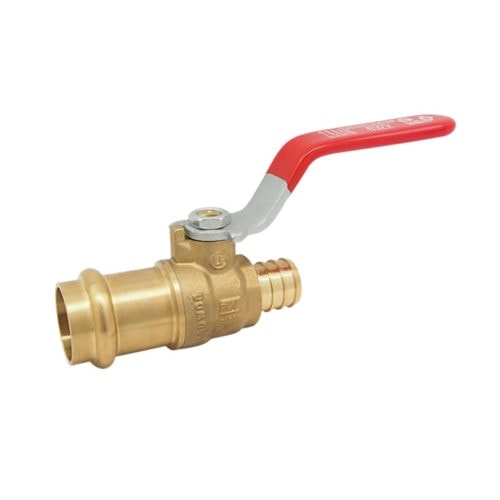
    F-1807

    These connections are manufactured according to the ASTM F1807 standard. The process of installing valves with them requires an appropriate crimp ring and PEX tube/pipe and involves the following steps:

    1. Sliding the crimp ring over the end of the tubing/piping
    2. If installing a tailpiece, mounting the union nut over the tailpiece before connecting it to the tube/pipe
    3. Inserting the valve into the end of the tubing/piping until it stops
    4. Positioning the crimp ring between 1/8 to 1/4 inch away from the end of the tubing/piping and over the ribs of the valve
    5. Crimping the crimp ring with a crimping tool
    6. Checking the crimp was made properly with a gauge5004AB

    F-1960

    These connections are manufactured according to the ASTM F1960 standard. The process of installing valves with them requires an appropriate ring and PEX tube/pipe and involves the following steps:

    1. Inserting the ring onto the PEX tube/pipe
    2. If installing a tailpiece, mounting the union nut over the tailpiece before connecting it to the pipe
    3. Expanding the PEX tubing/piping and ring with an expander tool
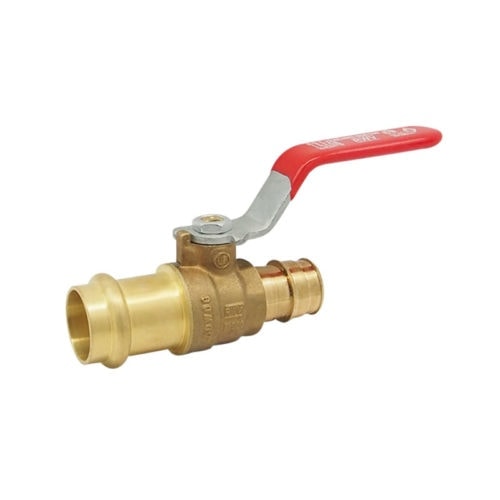
    4. Inserting the expanded assembly onto the PEX valve5014AB

    EVERLOC+

    These connections are manufactured according to the REHAU EVERLOC+® patented system. Valves with EVERLOC+® compression-sleeve connections require EVERLOC+® PEXa compression sleeves and REHAU PEXa tubes/pipes for installation. Installation of the components should only be performed with EVERLOC+® compression-sleeve tools.

    5414AB

    Why Should I Use PEX Valves for My Application?

    Why Should I Use PEX Valves for My Application
    Click to Zoom

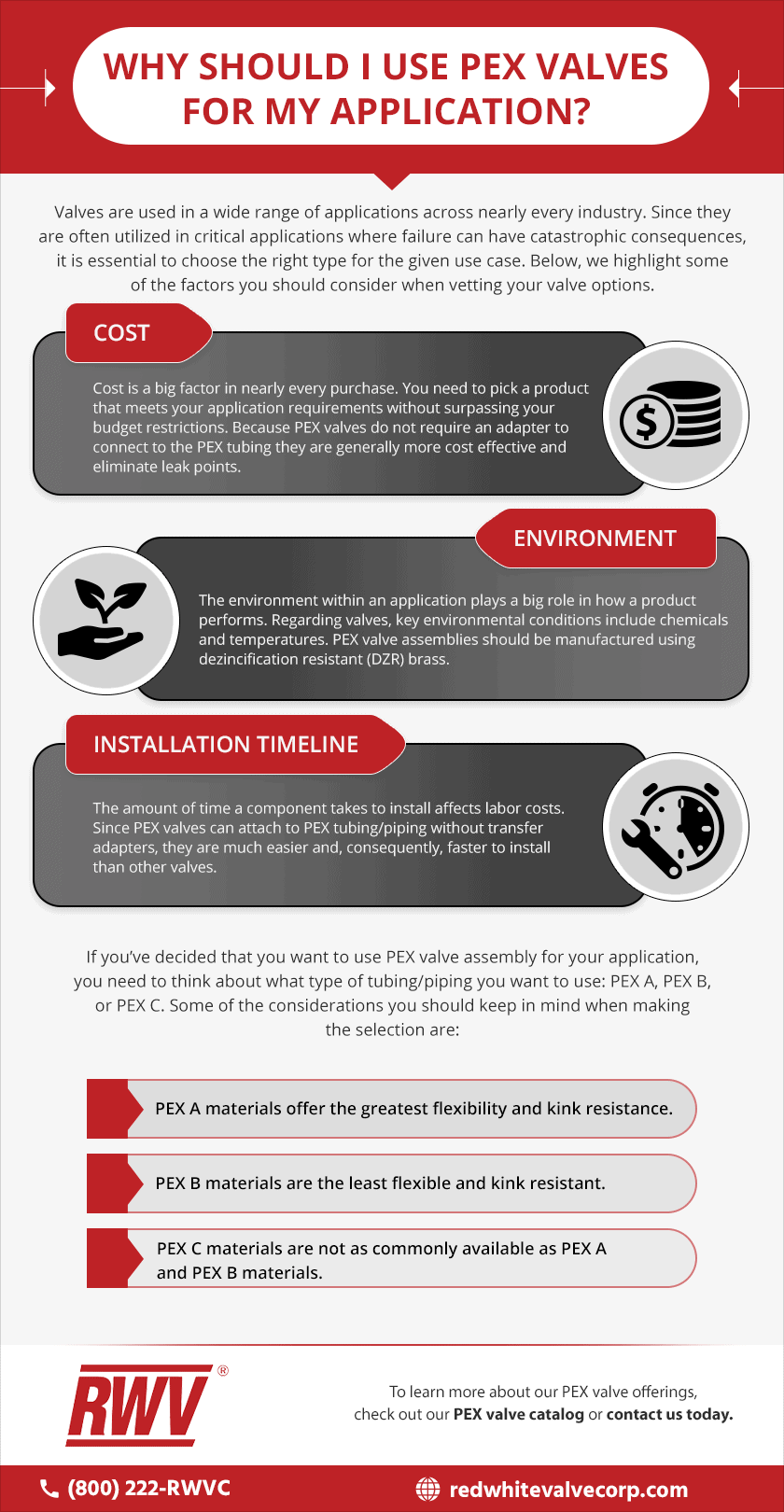
    Valves are used in a wide range of applications across nearly every industry. Since they are often utilized in critical applications where failure can have catastrophic consequences, it is essential to choose the right type for the given use case. Below, we highlight some of the factors you should consider when vetting your valve options.

    • Cost. Cost is a big factor in nearly every purchase. You need to pick a product that meets your application requirements without surpassing your budget restrictions. Because PEX valves do not require an adapter to connect to the PEX tubing they are generally more cost effective and eliminate leak points.
    • Environment. The environment within an application plays a big role in how a product performs. Regarding valves, key environmental conditions include chemicals and temperatures. PEX valve assemblies should be manufactured using dezincification resistant (DZR) brass.
    • Installation timeline. The amount of time a component takes to install affects labor costs. Since PEX valves can attach to PEX tubing/piping without transfer adapters, they are much easier and, consequently, faster to install than other valves.

    If you’ve decided that you want to use PEX valve assembly for your application, you need to think about what type of tubing/piping you want to use: PEX A, PEX B, or PEX C. Some of the considerations you should keep in mind when making the selection are:

    • PEX A materials offer the greatest flexibility and kink resistance.
    • PEX B materials are the least flexible and kink resistant.
    • PEX C materials are not as commonly available as PEX A and PEX B materials.

    PEX Valves at RED-WHITE VALVE CORP.

    Want more information on PEX valves? Ask the experts at RED-WHITE VALVE CORP. We supply high-quality valves, including PEX valves, to customers in various markets. Our team can answer or address any questions or concerns you may have about these products.

    If you want to purchase PEX valves for your operations, we’ve got you covered. We offer a range of PEX valves:

    • Ball valves
    • Transition ball valves
    • Ball valves with drains
    • Ball valves with mounting feet
    • Ball valves with drains and mounting feet
    • Flange ball valves

    To learn more about our PEX valve offerings, check out our PEX valve catalog or contact us today.

  10. An Introduction to Pneumatic Actuators

    Comments Off on An Introduction to Pneumatic Actuators

    What Is a Pneumatic Actuator?

    Actuators convert potential energy into kinetic energy (i.e., mechanical motion) when prompted by a control signal. They are integrated into a variety of devices and systems to perform various tasks. There are many types available, each of which is suitable for different applications. One way of categorizing them is by their power source (i.e., what form of energy they use to produce mechanical motion).

    Pneumatic actuators—also referred to as pneumatic cylinders, air cylinders, and air actuators—rely on compressed air for their operation. While all pneumatic actuators have the same basic components (a cylinder, ports or valves, and a mechanical element), they can vary in design; for example, rotary actuators convert energy into rotary motion, while linear actuators convert energy into linear motion.Hovercraft Pneumatic Actuator

    Typical applications for pneumatic actuators include:

    • Aircraft
    • Automobiles
    • Packaging and production equipment
    • Pump systems
    • Trains

    How Does a Pneumatic Actuator Work?

    As mentioned above, a pneumatic actuator uses compressed air to produce mechanical motion. It does this by containing regular air, pressurized gas, or a combination of the two within a chamber and allowing it to expand. As the air/gas expands, it creates a pressure differential between the inside of the chamber and the surrounding environment, which energizes the air/gas. The air/gas is then directed out of the chamber toward a mechanical component (e.g., gear or piston), which actually performs the task.

    Advantages of Pneumatic Actuators

    Compared to other types of actuators, pneumatic valves offer a number of advantages.

    • They have a simple design, which makes them easy and, consequently, cheaper to produce.
    • They are highly durable and easy to maintain, resulting in lower replacement and repair costs.
    • They do not require electricity or ignition to operate, making them suitable for use in environments where combustion is a concern.
    • They can generate greater forces than electric actuators, which makes them better suited for handling heavier loads.

    Types of Pneumatic Actuators

    Pneumatic actuators can be classified according to a variety of design factors. For example, they can be categorized into three main varieties based on what type of mechanical motion they produce: linear, rotary, and combination.

    Linear Actuators

    Linear actuators are designed to produce linear motion. They use various mechanisms to perform this function, such as pistons and diaphragms. In piston-style linear actuators, the stroke length is dependent on the length of the cylinder. In diaphragm-style linear actuators, the stroke length is dependent on the stretch tolerance of the diaphragm.

    Piston-style linear actuators can be further classified into single-acting actuators and double-acting actuators. Single-acting actuators rely on air pressure to move the piston in one direction and a spring to move it back to the original location. Double-acting actuators rely on air pressure to move the piston forward and back. The former has a simpler design, a smaller footprint, and lower compressed air requirements. The latter offers greater force capacities, faster operating speeds, and longer lifespans.

    Rotary Actuators

    Rotary actuators are designed to produce rotary motion. Similar to linear actuators, they use a variety of mechanisms to perform this function. Some of the most commonly used are pistons, diaphragms, yokes, vanes. Piston-style rotary actuators offer a limited range of rotation, yoke-style rotary actuators offer up to 90 degrees of rotation, and vane-style rotary actuators offer up to and exceeding 360 degrees of rotation.

    Combination Actuators

    Combination actuators are designed to produce both linear motion and a limited degree of rotary motion. They are commonly used in work holding applications, where they are used for clamps that must be constantly engaged, disengaged, and reengaged to switch out workpieces.

    Pneumatic Actuators From RED-WHITE VALVE CORP.

    Pneumatic actuators play a vital role in many different devices and systems (e.g., in valve systems, they open and close the valve to start and stop the flow of fluid). Given their importance, it is essential to source them from a reliable supplier. Otherwise, they may underperform or fail, which can lead to loss of productivity and profitability.

    Need pneumatic actuators you can trust in your critical valve applications? The experts at RED-WHITE VALVE CORP. have got you covered! We offer high-quality pneumatic actuators for valve assemblies used in industrial and commercial applications. To learn more about our product offerings, contact us today.

Close
Phone

Easily get up-to-date technical sheets for valves

Download RWV App
X

Have Any Questions?

Click Here Now!