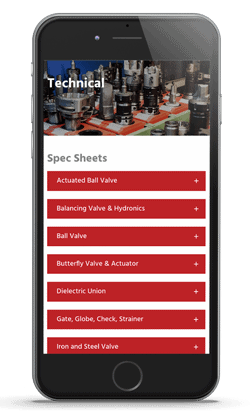

The valve industry serves as a foundation for modern infrastructure, supporting everything from municipal water distribution to mission-critical HVAC systems. Design engineers and mechanical contractors depend on precise technical data to specify components that satisfy performance requirements and budget limits. Our informational pages consolidate decades of manufacturing expertise into direct references designed for your benefit.
RED-WHITE VALVE CORP. is a global manufacturer of high-quality valves with robust QC processes and competitive pricing. We provide engineers and contractors with precision-engineered flow control solutions for HVAC, plumbing, and industrial processing systems worldwide.
-
 Global Manufacturing
-
 Precision Engineering
-
 Competitive Pricing
Explore this resource library to learn more about specific valve types, applications, and more.
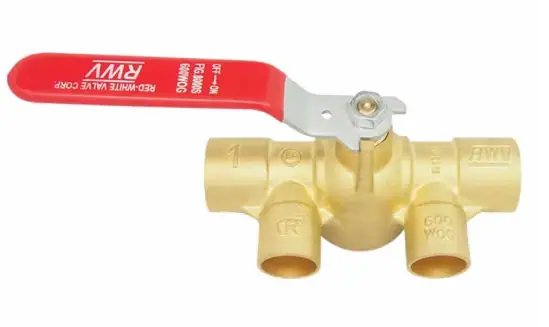
Ball Valves
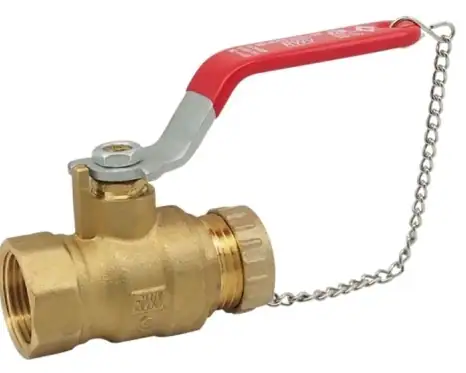
Our ball valve resource provides the technical depth required for professionals specifying quarter-turn shut-off solutions. These components are essential for systems that require tight shut-off and low pressure drop across a range of temperatures. We offer diverse ball valve types and configurations to meet the specific needs of hydronic heating, cooling loops, and process control.
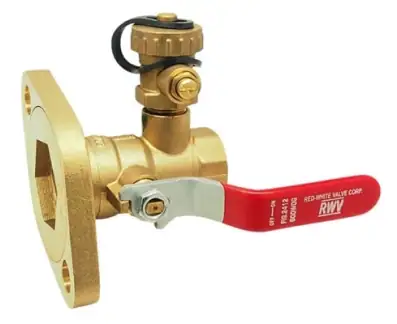
-

Port Configurations
Choosing between full, standard, reduced, and V port designs impacts flow velocity and system pressure.
-

Material Selection
We manufacture valves using brass, bronze, cast iron, thermoplastic and stainless steel to handle different fluid chemistries across the plumbing, oil and gas, chemical, and manufacturing industries.
-

Ball Valve Types
Learn about the distinct properties and benefits of plumbing, gas, wastewater, and steam ball valves.
-

Seat Materials
High-performance PTFE and reinforced seats ensure reliable sealing under varying thermal loads.
Whether you are managing a potable water project or a complex HVAC installation, understanding these variables can prevent premature component failure.
Wye Strainers
Contamination represents one of the most common causes of reduced equipment lifespan and system failure. Our wye strainer resource page addresses this challenge, explaining how proper pre-filtration protects your investment in downstream pumps, control valves, and heat exchangers.
For proper wye strainer specification, this resource explores the following elements:

How Wye Strainers Work
Learn how they are used in coarse or pre-filtration to filter solids from a gas or liquid.

Applications
Discover the types of applications that rely on wye strainers, including water, gas, air, steam, and process media.
Selecting the correct wye strainer directly affects both system performance and long-term operating costs. From steam systems to chilled water loops, the right strainer design and mesh screen type can protect critical infrastructure.
Types of Industrial Valves
Specifying the correct industrial valve involves understanding the limitations and functional strengths of various designs. Knowing the difference between valve types is the first step to optimizing flow control, throttling, and backflow prevention in your piping system.
Our resource on the types of industrial valves breaks down the key features and ideal applications of each valve type, which includes:
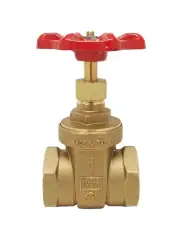
Gate Valves
These provide an unobstructed flow path in the fully open position and a tight shutoff gate in the closed position, making them ideal for on-off or isolating service with low pressure drop.
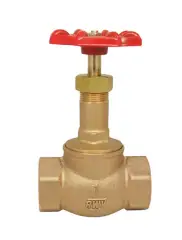
Globe Valves
Using a globe-shaped disc to stop, start, and regulate flow, globe valves offer precise throttling control for applications involving frequent flow adjustment.
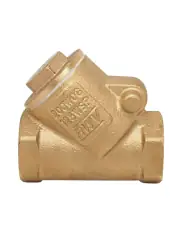
Check Valves
These function as automatic backflow preventers, protecting pumps and upstream piping from reverse flow and water hammer.
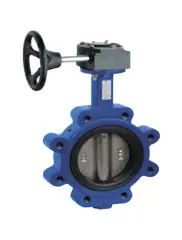
Butterfly Valves
These provide a compact, lightweight solution for accurate, reliable flow control, particularly in space-constrained HVAC mechanical rooms.
For engineers or contractors working on complex hydronic or plumbing systems, understanding these functional differences can prevent costly specification errors.

Guide to Lead-Free Valves
Federal and state lead-free regulations have transformed the landscape of valve specification for potable water. Navigating these requirements involves a thorough understanding of material science and legal compliance standards.
Our guide to lead-free valves discusses these requirements, including:
-

Legislation Overview
USA Public Law 111-380, the Reduction of Lead in Drinking Water Act, and California AB 1953 restrict lead content in any component contacting potable water.
-

Lead Content Calculations
Compliance is determined by the weighted average lead content of wetted piping and fitting surfaces, which must remain below 0.25%.
-

Types of Lead-Free Valves
Learn about our lead-free DZR brass balancing, ball, butterfly, gate, and other types of valves for your specific potable water application.
Mechanical contractors rely on product markings and certifications to verify compliance during the inspection process. Understanding these markers protects against specification errors that could lead to project delays or expensive replacements. Beyond the legal requirements, engineers must consider how lead-free materials perform under various pressure and temperature conditions to ensure long-term system reliability.
Further Resources
Technical education is a core component of the support provided by RED-WHITE VALVE CORP.
Explore our other resource formats to assist with your research, procurement, and documentation efforts:

eBooks
In-depth technical guides for valve selection, system design, and specialized applications



Literature
Product catalogs, sales brochures, and detailed specification sheets for download

Videos
Product demonstrations and practical comparisons in our comprehensive video library

Blog
Regular updates on industry trends and technical spotlights on latest innovations